

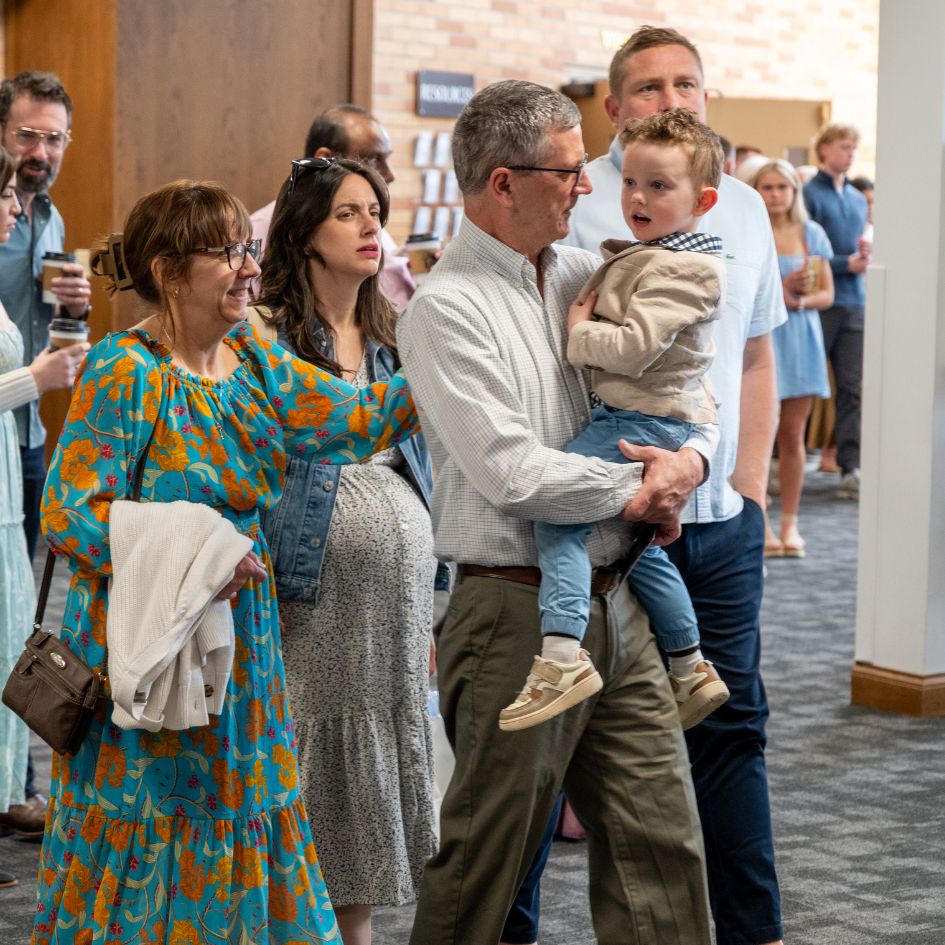
Some seasons of life feel like standing in a hallway between two doors. We have left something familiar behind, but the next thing has not opened yet. We know a change is coming, but we do not know exactly when, how, or what it will look like.
Maybe we are waiting for a job offer, a diagnosis, a treatment plan, a new home, a restored relationship, or clarity about what comes next. Maybe we are stepping from high school into college, from college into a career, or from one family season into another. Whatever the details, waiting can be uncomfortable. It can make us feel restless, afraid, and tempted to force an answer.
But waiting is not wasted time. It is not passive time. It is an active pursuit of God.
Psalm 27 gives us a deeply practical pattern for navigating the space between where we have been and where we want to be. David does not pretend that trouble is absent. He talks honestly about enemies, threats, uncertainty, and fear. Yet he also shows us how to remain steady: by remembering who God is, refining what we desire, praying with dependence, and holding onto hope.
Who we become while we are waiting matters more than the thing we are waiting for.
Waiting Well Starts on the Inside
Our circumstances matter, but the way we carry those circumstances begins in the heart. We may not be able to control the timing of an answer, but we can choose where we place our confidence.
Psalm 27 is a prayer filled with both confidence and need. David begins by remembering God’s character, then turns to God with honest requests. That order matters. Before trying to solve the problem, he anchors himself in the One who is faithful.
Four practices rise out of this psalm and help us wait well.
1. Build Confidence Rooted in God’s Character
David opens with a powerful declaration: the Lord is his light, salvation, and fortress. Notice the personal language. God is not merely a light somewhere in the distance. He is our light. He is not simply capable of saving. He is our salvation. He is not just a fortress in theory. He is our fortress.
That changes how we face uncertainty.
- God is our light. He exposes threats we cannot see and guides us when the path ahead is unclear.
- God is our salvation. When we are overwhelmed, stuck, or unable to rescue ourselves, he is the One who saves.
- God is our fortress. When trouble surrounds us and we cannot escape the circumstance, he surrounds us with his presence and protection.
Fear often reveals what we truly trust. It works like a diagnostic. When the unknown rises, it exposes whether our confidence is rooted in God or in our ability to control outcomes.
We can fear missing out. We can fear failure. We can fear choosing the wrong path or waiting too long. Those fears can lead us toward self-reliance, frantic activity, and a constant attempt to secure ourselves.
David faced the threat of being devoured, attacked, and surrounded. Yet he continued to say that he would not be afraid. This was not because his situation was easy. It was because God’s character was greater than the threat.
We cannot always change the circumstance around us. But we can remember who stands with us in it.
2. Focus Our Desire on God’s Presence
After reflecting on God’s character, David names the one thing he wants most: to dwell in the house of the Lord, to delight in God, and to seek him.
That is a challenging question for all of us: What are we seeking most in this season?
We want many things, and some of them are good. We want direction, stability, healing, provision, meaningful work, and peace in our homes. But underneath all of those desires is a deeper longing that no achievement or answer can fully satisfy.
Nothing less than God’s presence can satisfy the deepest longing of the human heart.
David wanted to be with God because he knew that God’s presence was a safe place. In God’s presence, he was concealed, protected, and lifted up. He did not have to live consumed by the pressure of getting somewhere else. He could be fully present because he knew he was where he needed to be.
This does not mean we stop caring about the future. It means our satisfaction is not held hostage by the future.
We can be in transition and still be filled. We can lack the answer we want and still experience peace. We can wait for something to change while recognizing that God is already present with us now.
Be Careful What Shapes Our Desires
The more time we spend around something, the more it shapes us. Our desires are influenced by the voices, habits, content, and expectations we repeatedly allow into our lives.
It is easy to follow a trail of distractions until we find ourselves chasing things God never asked us to pursue. We can become so fixated on what we do not have that we lose sight of what God has already given.
God’s presence lifts our heads above the spiral. It opens our hands in worship instead of closing them around control. As we spend time with him, our desires are gradually shaped by what he desires: justice, mercy, humility, care for those in need, and participation in his kingdom work.
Waiting becomes healthier when our greatest desire is not simply an outcome, but closeness with God.
3. Express Dependence Through Honest Prayer
In the middle of Psalm 27, David shifts from reflection into prayer. He asks God to hear him, receive him, teach him, lead him, and protect him.
He does not hide his needs. He asks for acceptance, wisdom, and deliverance.
First, David asks God not to abandon him. Even if the closest human relationships fail him, he trusts that the Lord will hold him close. This is a reminder that God’s acceptance is not fragile. He is not distant from us in the hard places.
Then David asks for wisdom: “Teach me how to live.” He wants to know the right path, especially when danger and opposition are real. He also asks for deliverance, trusting God with threats he cannot overcome alone.
There is a reality to suffering while we wait. Being secure in God does not mean we never feel pressure. We may still feel attacked, surrounded, or weary. Faith does not deny the pain. Faith reminds us that we are not abandoned in it.
Sometimes our response to uncertainty is to take everything into our own hands. We search, scroll, compare, calculate, and chase every possible solution. We move from one option to another, hoping the next search will finally quiet the anxiety.
Doing practical work is not the problem. We still apply, plan, ask questions, seek counsel, and take wise steps. The difference is whether we do those things from fear or from trust.
Waiting well means we work faithfully without trying to manipulate our way into security.
We can actively pursue the next step while holding the outcome with open hands. We can pray, “Lord, show us what to do,” while trusting that he already sees what we cannot.
4. Let Hope Sustain Our Patience
David ends with a turning point: “Yet I am confident that I will see the Lord’s goodness in the land of the living.”
That word, “yet,” carries weight. David has named his fears and requests. He has been fully honest about the struggle. Yet he chooses confidence in God’s goodness.
He does not say he is confident that everything will unfold exactly according to his preferred plan. He says he is confident that he will see the goodness of God.
That is biblical patience. Patience is not confidence in a particular outcome. Patience is confidence in God.
Faith is living without scheming. It is seeking God, praying honestly, taking faithful steps, worshiping, and resting without trying to force the entire story into our own hands.
For us, hope has a name: Jesus Christ. He is the light in the darkness, our salvation through his sacrifice, and the One who has already won the victory. Our circumstances may still feel unresolved, but Christ is already present on the other side of what we are waiting for.
That means our waiting has purpose. God can use this season to form deeper dependence, greater confidence, clearer desire, and a stronger faith than we could develop in comfort.
Questions to Carry Into the Week
When we find ourselves in an in-between season, these questions can help us move from self-reliance toward trust:
- What am I seeking most right now?
- What fear is shaping my decisions?
- How am I responding to my needs: with self-reliance or trust in the Lord?
- What is sustaining my hope: the outcome I want or the Giver who is with me?
- Where is God inviting me to take a faithful next step without forcing the result?
We do not need to have every answer today. We simply need to keep bringing our hearts back to the One who is our light, our salvation, and our fortress. His goodness is worth the wait.
Join our non-denominational church in Cleveland, OH, today or tune into our online church services.
FAQ: Waiting on God
What does it mean to wait well on God?
Waiting well means actively trusting God in a season where the outcome is not yet clear. It includes remembering his character, seeking his presence, praying honestly, taking faithful steps, and refusing to let fear control our decisions.
Does waiting on God mean doing nothing?
No. Waiting on God is not inactivity. We can still plan, seek wise counsel, work, apply, serve, and take responsible next steps. The difference is that we act from faith rather than desperation, trusting God with the results.
How can we have peace when the future feels uncertain?
Peace grows when our confidence is rooted in God’s character rather than our ability to predict the future. God is our light when we cannot see clearly, our salvation when we need rescue, and our fortress when we feel surrounded.
What should we pray during a waiting season?
We can pray honestly for God’s presence, acceptance, wisdom, direction, protection, and deliverance. We can bring him our fears without pretending they are not there, then choose to place our hope in his goodness and faithfulness.
Why does God allow seasons of waiting?
Waiting can form us. It teaches us to depend less on ourselves and more on God. Even when we cannot see the purpose in the moment, God can use waiting to refine our desires, strengthen our faith, and prepare us for faithful kingdom work right where we are.